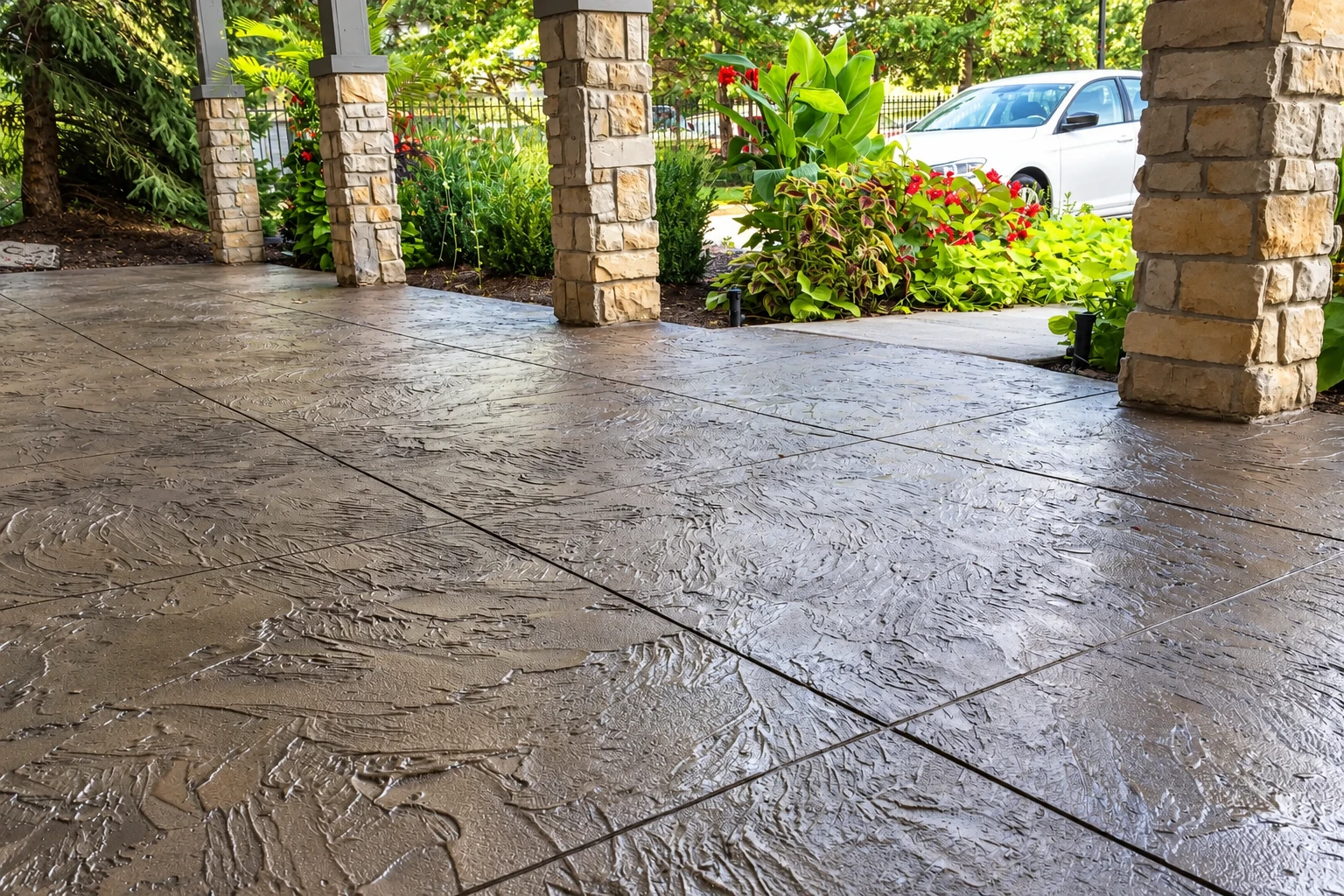
I start by looking at what's under your slab and where the water runs, because a pretty surface on a bad base just cracks and sinks in a nicer color. If the old concrete comes out, we dig down to the subgrade, the dirt the slab sits on, and pack a firm base instead of raking it level, then set forms sloped so water runs away from the house. Before anything gets mixed, I walk you through how much care each pattern and color takes over the years, so the design fits your budget and the time you want to spend on it. We pour early in the day so the top doesn't bake in midday heat and turn weak and dusty, mix the color into the concrete so it runs all the way through, stamp or texture it, and cut control joints, shallow grooves that give the slab a place to crack where you won't notice. Then it cures, the stretch where it hardens before anyone uses it, and we choose the sealer with you and wait until the concrete is ready before it goes on. If the budget gets tight, I'd rather simplify the pattern than skimp on the base, because a plain finish can be resealed for years but a sinking base only gets fixed by tearing it out.
Decorative jobs often come with other work attached. On a sloped yard, a colored patio may need concrete retaining walls to hold the ground beside it, and indoors, concrete floor installation can carry the same color into a family room or a converted garage. If you've already settled on a stamped pattern, our stamped concrete services page covers that work on its own.
One pattern, one color
A single stamped pattern in one color costs less than a detailed design and is easier to keep up, so it suits a patio or walk you want to look good without much weekend work. It's also where I point people when the base needs more of the budget.
Borders, extra colors and custom inlays
Intricate patterns with several colors, borders and inlays cost more and need frequent upkeep to hold their look, so they suit someone who wants a showpiece and doesn't mind the care. There's room in between, too, with a bit more color or texture than a basic design.
An overlay on the slab you have
An overlay is a cement-based mix laid over existing concrete, so it suits a slab that's solid but looks worn. If the old slab has sunk or cracked because of what's under it, the overlay usually follows, so I check that before recommending one.