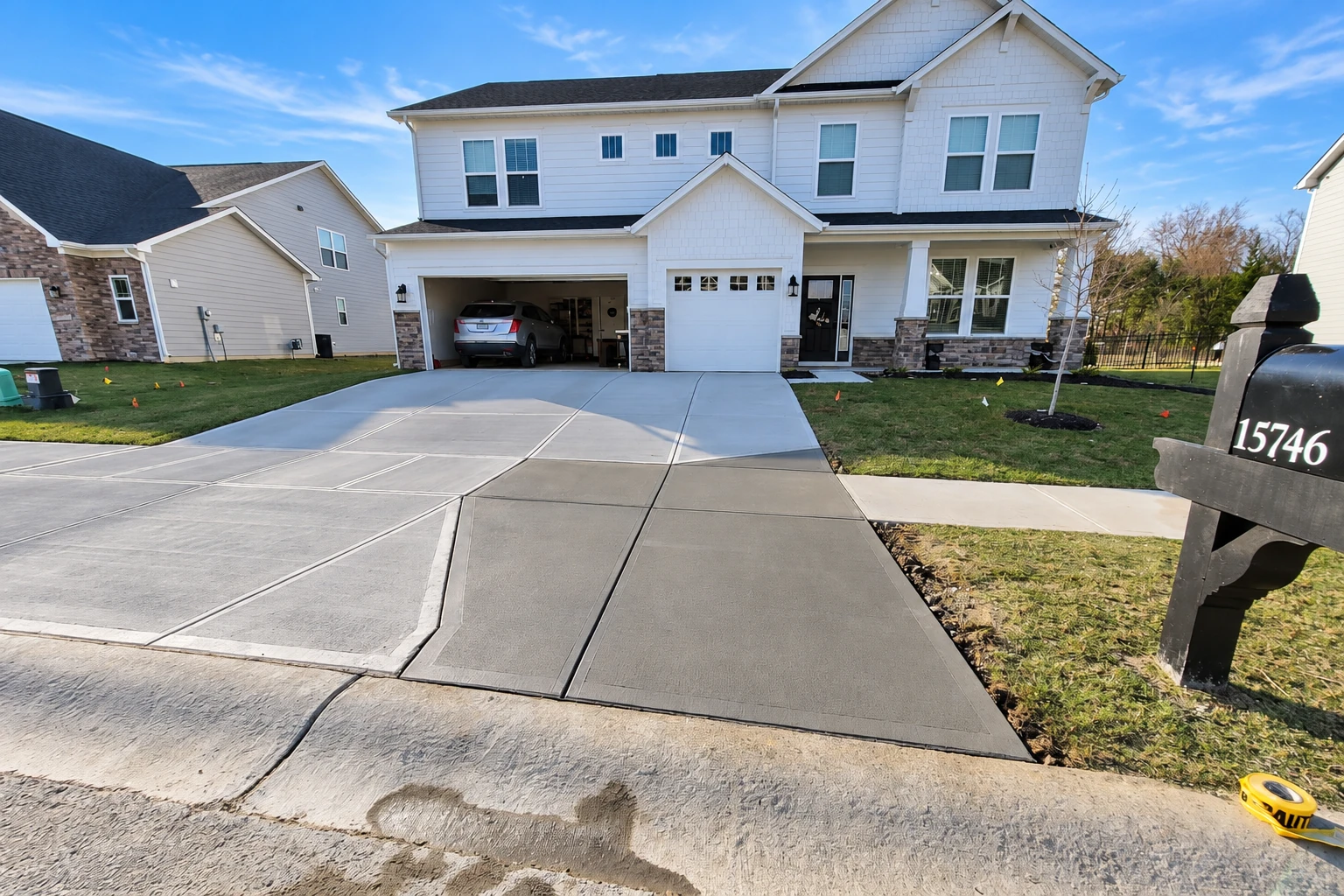
It starts before the quote. I walk the driveway to see where water runs now and what the ground is doing, and I write the slab thickness and the path water will take right on the quote so you can compare our bid side by side with anyone else's. On the job, our crew digs out to firm ground and packs the subgrade, the dirt and base rock the slab sits on, because a base that's only raked level settles and takes the concrete down with it. We set the forms so the surface falls away from your house and garage, lay rebar, the steel that holds the slab together if it cracks, and pour in the cooler part of the day so the top doesn't dry too fast and turn weak and dusty. Then we give it a broom finish, a light texture that keeps tires and shoes from slipping, and cut control joints while the concrete is fresh, so if it cracks, it cracks in a straight groove we chose. Before we leave, I tell you how long to keep the car off it while it cures, which is the wait while the concrete hardens and gains strength.
A lot of driveway jobs grow into the rest of the yard. If you want the same crew to pour a back slab while we're set up, concrete patio construction works the same way from the ground up, and stamped concrete can give the driveway, or just a border along it, the look of stone or brick.
Plain broom finish
This suits most driveways, because the texture grips in the rain and it costs the least, which leaves more of the budget for the base. If money gets tight, this is where I'd point you, since nobody sees the base on day one but a weak base can't be fixed without tearing the slab out.
Stamped or colored finish
This suits a driveway that's part of the front of the house, where you want it to look like stone or brick instead of plain gray. It costs more and takes more care so it doesn't get slick, and we build the base and the slope underneath exactly the same way.