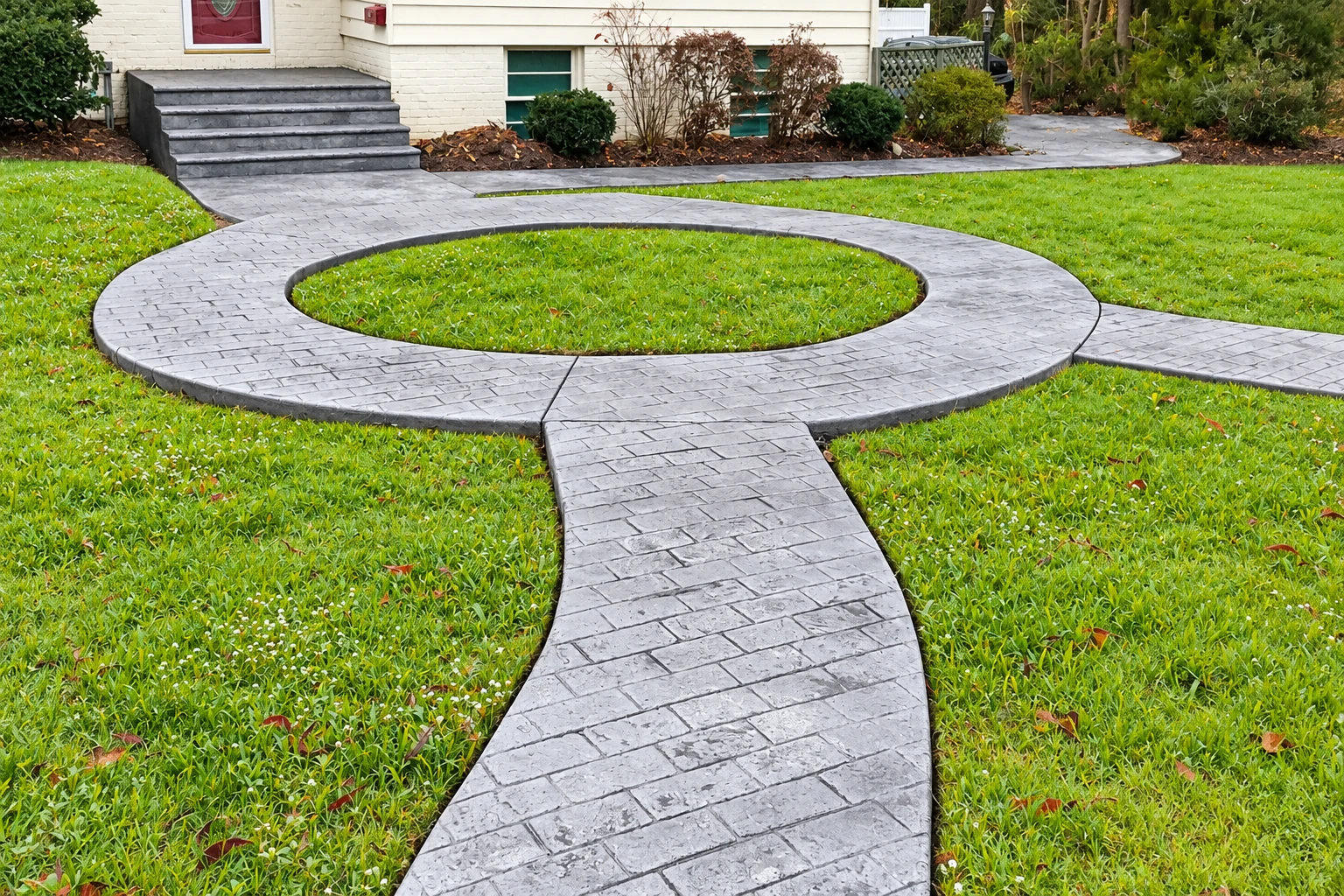
A walk is only as good as the ground under it, so the first job is the subgrade, the soil the walk sits on. We break out the old concrete, dig down to firm soil, cut out soft or spongy spots and fill them, then pack the base before a single form goes in. While the forms go up, we check where the water runs so the walk sheds rain toward the yard or the street, not back toward your house. Where a car rolls over the walk, we plan that stretch heavier, often with rebar, the steel bars that keep a crack from spreading apart, and I'll show you why on site. We pour early in the day, because concrete placed in midday heat can end up with a weak, dusty top, then give it a broom finish, the light texture that keeps shoes from slipping when it's wet. Last come the control joints, shallow lines cut into the slab so it cracks where we chose instead of wherever it likes, and then the walk cures, staying damp and undisturbed while it gains strength.
If you want color or a pattern on the walk, our decorative concrete work covers that, though if the budget only stretches so far, I'd put the money into the base first, because nobody sees it on day one and it's what decides whether the walk stays even. When the walk leads up to a garage with a cracked or stained floor, we can look at garage floor concrete during the same visit and plan both on one schedule.
Plain broom-finish walk
This suits most front walks and side paths, because the broom texture grips well and it's the simplest finish to keep clean. It also leaves more of your budget for the base and the joints, which is where a walk earns its keep.
Heavier section where a car crosses
If your driveway runs across the walk or a car parks over part of it, that stretch gets thicker concrete and steel. The rest of the walk stays built for foot traffic, so you only pay extra where the weight actually is.